
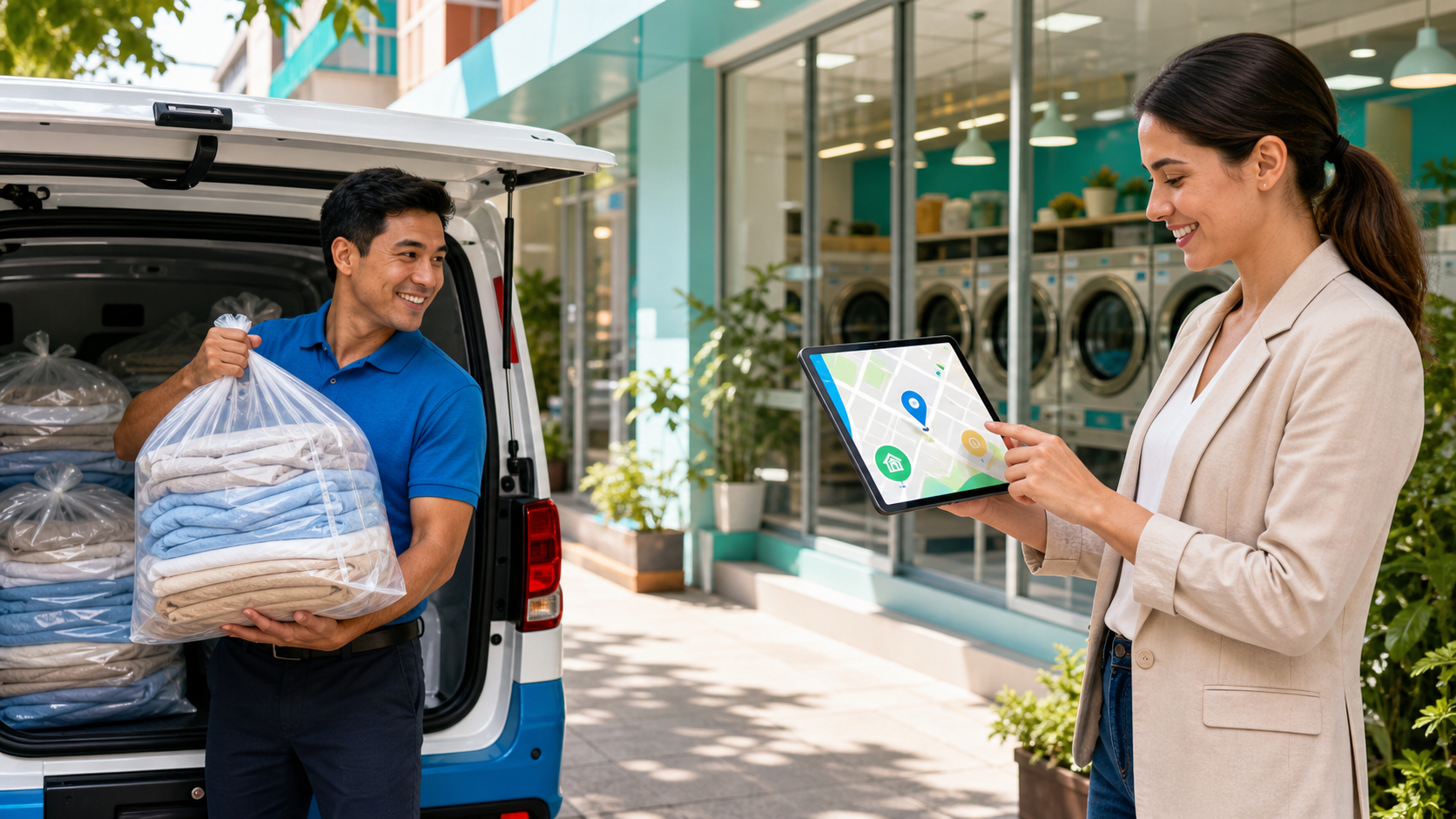
Launch Your Pickup Service with Local SEO Power
Laundry pickup demand always climbs in the fall. Schedules get packed with school, sports, and after-work events. Colder weather means heavier clothes, more loads, and less time to deal with laundry. People start searching for help so they can stay ahead of the holidays.
If you are rolling out a pickup and delivery service, you are not just adding a small feature. To Google, this can look like a new business line that deserves its own local SEO plan. If you want to show up when someone types “laundry pickup” or “laundromat pickup in my area,” you need the right structure from day one.
In this guide, we will walk through a simple, clear checklist. We will cover how to set up a separate but connected Google Business Profile, build service area pages, add delivery-radius schema, and track calls and bookings that come from pickup customers only.
Decide Your Local SEO Structure Before You Click Publish
Before you launch anything, step back and decide what your pickup service really is inside your business. Ask yourself:
- Is pickup a totally separate brand with its own name and look?
- Is it a premium upgrade under your existing laundromat name?
- Or is it just another service from the same storefront, with no separate brand at all?
Your answer shapes how you handle local SEO. A true separate brand may call for its own Google Business Profile and its own top-level pages. An add-on service usually fits under your main profile, but still needs its own “hub” page and tracking.
Next, map your service areas the way a driver would see them. Do not promise the whole region if you only have one car and a tight schedule. Start with ZIP codes you can serve on the same route and a realistic drive-time radius in traffic, then prioritize dense apartment and condo areas and college neighborhoods that fill up in October.
On your site, plan a simple structure that makes it easy for both users and Google to understand how pickup fits into your business:
- One main laundromat location page that covers your physical store
- One pickup hub page linked from your main menu
- A set of service area pages for each high-priority city or neighborhood
Those service area pages become your local SEO engine for searches like “laundry pickup in [City]” and “laundromat local SEO friendly laundry delivery .”
Set up a High-Converting Google Business Profile for Pickup
Now decide how your Google presence should look. In many cases, the safest move is to keep one Google Business Profile for your main laundromat, then highlight pickup as a key service inside that profile. In some cases, a separate profile for a clearly branded pickup line can work, but it must follow Google’s rules for names, locations, and service areas.
Inside your profile, focus on pickup intent by selecting the right categories and listing the services and areas you actually cover:
- Primary category: Laundry Service
- Secondary category: Laundry Pick-Up Service, if it fits
- Service list: pickup and delivery, wash and fold, same-day options, etc
- Service area: the ZIP codes or cities you actually drive to
Add clear, short descriptions that say you offer pickup and delivery, what areas you cover, and how fast you turn around orders. If you have different fall or holiday hours for pickup versus walk-in, set those up in your profile so people are not surprised.
To turn views into real customers, treat your profile like a mini landing page with conversion-focused elements:
- Use a booking link with UTM tags so you know how many orders started from Google
- Add a tracking number for pickup calls where allowed, while keeping your main number consistent on your core profiles
- Load your FAQ with answers about pickup fees, order minimums, bags, and turnaround times
- Add fresh photos of delivery cars, branded bags, and drivers in uniform, with a few fall shots that feel current
Build Service Area Pages and Delivery-Radius Schema That Rank
Your pickup hub page is the anchor. Think of it as the home base for all pickup and delivery searches, and the page that ties your service area content together.
A strong hub page should include:
- A clear headline like “Laundry Pickup and Delivery Service”
- A simple map or list of cities and neighborhoods you serve
- Fall offers, such as first pickup free or a discount before holiday travel
- A quick pricing overview or starting rates
- Big, obvious buttons for “Schedule Pickup” and “Call for Pickup”
- An FAQ section focused on pickup and delivery
Below that, create focused service area pages. Each page should target one city or neighborhood, and each one needs to be unique and genuinely helpful. To do that, reference local landmarks and busy streets, the types of housing you see often in that area (such as apartments or student housing), and natural search phrases people might use, like “laundry pickup in [Neighborhood]” or “pickup and delivery laundry near [Local School].”
On each page, add schema markup so Google clearly understands your service reach. Include:
- LocalBusiness or a specific laundry-related type in your structured data
- A serviceArea field that matches the ZIP codes, cities, or radius you actually serve
- A pickup-related service type, like laundry pickup and delivery
Keep your name, address, and phone number consistent between schema, your Google profile, and your location details so Google does not get mixed signals.
Track Pickup Calls and Bookings Separately From Walk-in Customers
Pickup customers behave differently from walk-in guests. They may never see the front of your store, but they click, call, and book online. You want clear tracking so you know what is working and can separate pickup performance from in-store traffic.
Set up tracking numbers for pickup:
- Use dynamic number insertion on your pickup hub and service area pages
- Use a separate call extension number in Google Ads for pickup campaigns
- Keep your main NAP data the same on your primary profiles and directory listings
Next, tag every digital touchpoint with UTM parameters. That includes:
- Links from your Google Business Profile
- Paid social ads pushing fall pickup bundles
- SMS promos that tell people to “Text to schedule pickup”
- Email offers about pre-holiday laundry pickup
In your analytics platform, track events like:
- Clicks on “Schedule Pickup” buttons
- Form submissions for pickup quotes
- Phone calls from tracking numbers tied to pickup
From there, build a simple dashboard that splits walk-in and pickup. Watch:
- Call volume from pickup numbers
- Number of booked routes per week
- Average order value for pickup customers
- How many people book again after their first pickup
Launch, Measure, and Scale Your Pickup SEO Before the Holidays
To avoid last-minute stress, follow a 30-day launch calendar before the holiday rush hits full speed.
Week 1:
- Finalize your service areas and delivery radius
- Build or update your pickup hub page
- Set your Google Business Profile categories and services
Week 2:
- Write and publish your first 3 to 5 service area pages
- Add schema with serviceArea and local business details
- Set up tracking numbers and UTM links
Week 3:
- Test calls from desktop and mobile
- Test booking forms and make sure events fire in analytics
- Upload new pickup photos to your Google Profile
Week 4:
- Turn on Google Ads and paid social for pickup searches
- Promote fall or pre-holiday offers across your channels
- Review early results, fix any gaps, and adjust copy or areas
Once you are live, stick to a simple monthly routine. Check Search Console to see new pickup-related queries, and update fall and winter offers on your hub and service area pages so the content stays current. As your routes grow, expand or refine your service areas based on what your drivers can realistically cover. Keep testing new ad copy that highlights ease, time savings, and holiday stress relief.
At LaundroBoost Marketing, we build this kind of structure every day for laundromats that want steady pickup and delivery growth. Our team handles laundromat local SEO, Google Business Profile management, geofencing campaigns, and AI-powered support tools so owners can focus on running on-time profitable routes while the right customers keep finding them online.
Grow Your Laundromat With Local Customers Ready To Spend
If you are ready to show up where nearby customers are already searching, our laundromat local SEO strategy can help you win more high-value traffic and calls. At LaundroBoost Marketing, we focus on practical steps that boost visibility in your neighborhood and turn searches into repeat customers. Tell us about your location and goals, and we will outline a tailored plan that fits your budget. Have questions or want to see what is possible for your store today? Just contact us.